Wednesday, March 23, 2016

Please Bury Me In the Library
Written by J. Patrick Lewis and Illustrated by Kyle M. Stone
Published by Gulliver Books Harcourt Inc., 2005. 
This book of poems is all about the moments when you are so deep in your reading that time just seems to slip away. In this exagerated tale when you are not careful the time that may pass by while you are reading could be an eternity!
Lexile Level: Not Available
DRA Level: 24
Age Range: 8-11 years
Page Count: 32
Suggested Delivery: Read-Aloud

Key Words: Library, Reading, Books, Adventure, Poetry

Internet Resources:
J. Patrick Lewis's Webpage
http://www.jpatricklewis.com/
This is the authors own webpage, there are links for the students to play around with to get to know the author with answers to frequently answered questions. There is also for teachers a way to plan a visit with the author. This would be great to try and get the author to come and speak to the students about poetry.
New York Times Article
http://www.nytimes.com/2005/10/23/books/review/when-the-library-lights-go-out-please-bury-me-in-the-library-library-lovers.html?_r=0
This is a link to a New York Times article about Please Bury Me in the Library. This would be a great thing to share and read to the class before reading the book itself. It is a great read to get the students excited to read the book of poems.

Vocabulary:
  • Language: method of human communication. 
  • Sentences: a grammatical unit of one or more words that express an independent statement, question, request, command, etc. 
  • Paradise: an ideal place or state.
  • Haiku: Japanese poem of seventeen syllables, in three lines of 5, 7, and 5.  
  • Novel: a long written story usually about imaginary characters and events.
  • Classic: judged over a period of time to be of the highest quality and outstanding of its kind. 
Teaching Suggestions:
  1. Since this is a book of poetry, this would be a great introduction to a poetry unit. You can use this book as an example to refer back to when learning about different types of poems. 
  2. Give the students different poems from the book and have them draw their own pictures from what they see when they hear that poem. Paying attention to the descriptive words that are in the poems themselves.  
Reading Strategies:
  1. Before: Have the students complete a vocabulary self-awareness chart from the vocabulary words listed above. Here is a link to a website which has a downloadable word document of a vocabulary awareness chart that can be filled in based on your own vocabulary words. See the words that most of the students do not know and teach those words.
  2. During: Pick one of the poems that you find the most important as the teacher and do a close reading of that poem with the class. Make sure to print off a copy of the poem for each of the students so that as you are pointing things out they can be making note of it on their own copy.
  3. After: Have the students question the author at the end of the reading. Ask them to answer the question, "why did the author write about reading?" Looking back through the text ask the students to point out why the author did certain things in his poems for emphasis. 
Writing Activity:
Students will be asked to write a poem. They are going to be asked to write a poem that is related to the reading. Ask them to focus on one of the scenes in the book and making it into their own perspective. If they finish this and have extra time they may write a poem that includes a description about there own reading experiences.
A Home for Mr. Emerson
Written by Barbara Kerley and Illustrated by Edwin Fotheringham
Published by Scholastic Press, 2014

This is the story of Ralph Waldo Emerson who was a great writer. The story follows his journey from a city boy who dreamed of owning his very own land to making this dream come true as he fills his home with great books, ideas, and people.   
Lexile Level: 830L
Age Range: 8-13 years old
Page Count: 48 
Suggested Delivery: Read-Aloud

Key Words: Home, Friendship, Non-Fiction, "Savings Bank", Literature.   

Internet Resources:
Barbara Kerley's Website
http://www.barbarakerley.com/Site/Welcome.html
This is Barbara Kerley's personal website where she has posts about herself that would be great for the students to explore more about the author. There is also a book trailer to some of Barbara's other books. For teachers there is a great page that has each of her books with a link to the standards that can be taught along with the book and why.
Edwin Fotheringham's Scholastic Page
http://www.scholastic.com/teachers/bookwizard/books-by/edwin-fotheringham#cart/cleanup
For the students who really enjoyed the illustrations this webpage is one students can go to learn more about the illustrator and see the other books that Edwin Fotheringham has illustrated for that they might also like to read.

Vocabulary:
  • Visitor: a person visiting a person or place. 
  • Community: a group of people living in the same place, or having a particular characteristic in common. 
  • Discussion: a conversation or debate about a certain topic.
  • Rebuild: to build something again after it has been destroyed. 
  • Impatient: restless in desire or expectation. 
  • Renew: to reestablish, or repeat something after a break. 
Teaching Suggestions:
  1. Since Mr. Emerson is a writer, ask the students to become writers of their own. Ask students to respond to the prompt, "What is the best day ever?" Have the students use their imagination to come up with this. After they have written their stories, go through the editing process, and then put all of the stories together in a class book to share with everyone. 
  2. Have the students do research into other famous authors and have them choose one to become for the day. In the book Mr. Emerson has conversations with his friends and neighbors in the parlor, so have the students role play what they think a conversation might look like with those authors that they have researched. 
  3. The book does not go into much detail about who Mr. Emerson is, I would have the students do more research on their own into who Mr. Emerson was and create a profile to share with the class including all of the facts that they learned about Mr. Emerson. They may use the facts that they found from the reading of the text, but they must also include new information that was not in the book. 
Reading Strategies:
  1. Before: Have a guest speaker come to the class to discuss what it is like to be an author. Have the author tell the students what their life as an author is like so after they have read A Home for Mr. Emerson, they can compare the lives of these two people. Also have the author describe to the class the process of being an author from the first idea to the finished product. 
  2. During: As the teacher reads the story aloud, have students write down in their reading journals all of the facts that they hear and find interesting. 
  3. After: There are questions in the back of the book under Build A World of Your Own with questions that help the reader to make connections with the text. These questions ask students to look at the type of person they are, the kind of job they might want, the kind of house they would like to build, and community. 
Writing Activity:
The end pages are filled with quotes from Mr. Emerson. Have the students read each of the quotes and pick the one that resonated with them the most. Have them write about this quote and think about the quote in context with what they have just read about Mr. Emerson along with why they picked this quote. 

Tuesday, March 22, 2016

Pay It Forward
Written by Catherine Ryan Hyde
Published by Simon & Schuster Books for Young Readers, 2014
This is the middle grade version of the story of a twelve year old boy named Trevor who takes on the challenge of his social studies teachers assignment to come up with a plan to change the world. His idea is to "pay it forward" by doing one good deed for three people and in turn they pay it forward. This story follows Trevor's incredible journey of putting his plan into action. 
Lexile Level: 630L
Age Range: 9-13 years
Page Count: 261
Suggested Delivery: Read-Aloud

Key Words: Good Deed, Action, Extra Credit, Change, Kindness.

Internet Resources:
Catherine Ryan Hyde's Website
This is the authors website, which is great for the students to look at with a video of the author explaining her reasoning for writing this version of the book. There is also links to other books by the author on her website along with other resources. 
Pay It Forward Foundation Website
This is the Pay It Forward movements foundation website. This is a great resource for the students if they want to get more information on the Pay It Forward movement. There is a great video on the home page of the website describing what the movement is all about. 

Vocabulary:
  • Generosity: the quality of being kind and generous. 
  • Life Insurance: insurance that pays out a sum of money either at the death of the insured or after a set period of time. 
  • Citizen: a person who legally belongs to a country and has the rights and protection of that country. 
  • Vigil: an event or period of time when a person or people stay in a place quietly, or pray. 
  • Commitment: an engagement or obligation to something. 
  • Recognition: identification of something's existence. 
Teaching Suggestions:
  1. Have students get in groups of 5 and research a charity that they would like to be a part of and have them do research into what the charity is all about. After they have done the research have them draft a letter to send to the charity asking them what they can do to help out, or plans that they come up with or help the charity.
  2. Once students have read the novel have them watch the Pay It Forward movie. Have them compare the movie to the book and write a short comparison between the two in their reading journals.
  3. Create a Pay It Forward Tree where students who are seen performing good deeds or tell the teacher of a good deed that they have done, write it on a leaf in which they write what they did and their names and stick it on the tree. This will help to prompt students to preform good deeds. 
Reading Strategies:
  1. Before: Before reading the book, ask the students to brainstorm acts of kindness that they or a group of friends could do for someone else. After they have brainstormed in groups of 4 have them come up with a plan of how to put one of those acts of kindness into action.
  2. During:While reading the story aloud to the class, create a concept map with the class to keep track of all of the characters and how they each play a part in the story.
  3. After: Have the students complete a popcorn review of what they thought about the book after having finished it. Have them discuss the parts that they found most interesting and surprising. Have them tell you if they would recommend the book to someone else and why. Have the prompts written on the board and then set a timer for 10 minutes and let the reviews begin. 
Writing Activity:
Students will write a letter to Trevor explaining why they think he is a hero or why they think he is not one. For a more challenging version have students write a letter to Arlene or Reuben from Trevor explaining why or why not he thinks that he is a hero for what he inspired. 
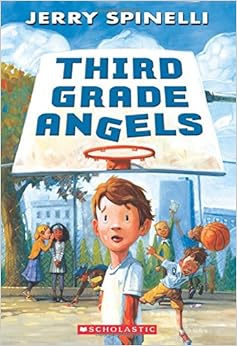
Third Grade Angels
Written by Jerry Spinelli and Illustrated by Jennifer A. Bell
Published by Scholastic Inc., 2012
This is the story of Suds and the rest of his classmates in their year as third grade angels. They are given the opportunity to earn halos throughout the year. The question on everyone's mind is, who is going to get that very first halo? Suds and some of his classmates go all out trying to be the one who gets the first halo of the year. Read on to find out who it is. 
Lexile Level: 390L
Age Range: 7-9 years
Page Count: 134
Suggested Delivery: Read-Aloud

Key Words: Angels, Competition, School, Funny, Change.

Internet Resources:
Jerry Spinelli Scholastic Page
http://www.scholastic.com/teachers/contributor/jerry-spinelli
This is Jerry Spinelli's scholastic author page. This can be used by the students before reading the book to get to know the author or it can be used after reading the book for the students to find out about the other books that he has written that they might enjoy.
Scholastic Book Page
http://www.scholastic.com/teachers/book/third-grade-angels#cart/cleanup
This is a great resource for the teacher because it has a great summary of the book that could be used to get the readers excited about the book as well as a link to a list of discussion questions that can be used.

Vocabulary:
  • Impression: an idea, or feeling about someone or something, usually based on very little evidence. 
  • Halo: a circle, usually of light, surrounding someones head, showing they are a saint.
  • Good Deed: something that is done or accomplished with the best of intentions. 
  • Observant: quick to notice things.
  • Shock: a sudden upsetting or surprising event or experience.
  • Bribe: to persuade someone to act in your favor. 
Teaching Suggestions:
  1. Have students come up with their own rhyme for each of the grades in elementary school like the one in the book as a class.
  2. Ask students to read Fourth Grade Rats on their own and after everyone has finished reading it have the students have discussions in groups of 4 or 5 about the change that takes place from third grade to fourth grade and how the main character changes between the books. 
  3. Have students work in groups of 4 to come up with their own Reader's Theater scene that they think should have been in the book. They have to make sure that the way they portray the characters are the same as how they are portrayed in the book. 
Reading Strategies:
  1. Before: Before reading the book read the title and the back of the book to the students and then show them the cover. Have the students predict what is going to happen in the book. 
  2. During: Complete many think-alouds as you read the story out-loud to the class by making predictions, clarifying something you think might be challenging for the students, visualizing parts, making personal responses, questioning the text, summarizing at the end of each read-aloud, and making connections.  
  3. After: Have the students engage in a debate over who they thought should have won the first halo of the year. Have them get into groups of who they believe should have won and using the book find evidence that supports their opinion before having a debate with the other groups. 
Writing Activity:
Have the students put themselves in the shoes of the main character Suds and have them write about how he has changed over the course of the book. At the end of that ask them to make a prediction based on how they think Suds' year will go in the fourth grade as a fourth grade rat.

Monday, March 21, 2016

Swindle
Written by Gordon Korman
Published by Scholastic Press an Imprint of Scholastic Inc., 2008
This is a story of a boy named Griffin Bing who finds a very valuable baseball card in the rubble of an abandoned house. After selling it to someone and getting "swindled" out of a very large amount of money, he gets together a team to steal back the card. 
Lexile Level: 730L
Age Range: 9-11 years
Page Count: 252
Suggested Delivery: Independent Read

Key Words: Justice, Heist, Plan, Adventure, Friendship

Internet Resources:
Gordon Korman Website
This is the website of the author which has links that students can click on to better get to know the author and to explore more of the books that the author has written. 
Scholastic Book Page
This scholastic webpage is great for both students and teachers. There are links to teaching resources for the teacher to use when teaching the book. For the students there is a video book trailer that they can watch before reading the book. 

Vocabulary: 
  • Swindle: to cheat, steal, trick, deceive, defraud, lie, rob, con, backstab, obtain dishonestly.
  • Collectible: an object valued by collectors.
  • Heist: a robbery.
  • Ultimate: the greatest or final. 
  • Mechanism: a piece of a machine.
  • Exhilaration: a feeling of excitement and happiness.
Teaching Suggestions:
  1. Ask the students to read the article http://listosaur.com/history/10-greatest-swindles-in-united-states-history/ and pick one of the greatest heists from the list and have them present it to the class. 
  2. Give the students the scenario: the house is like a fortress with burglar alarms on all the windows and doors. The only safe entry point is a skylight on the roof of the house. In addition, there is a dangerous guard dog on duty inside the house. And a busybody neighbor sits on his porch staring at the house all day long. AND the thief himself seldom leaves the house. BUT you must get inside to get back what is yours. How will you do it? Have the students describe the team that they would use and why. Have the class vote on the best plan. 
  3. As they read ask the students to think about the question: What do you think of Griffin's plan to get revenge on Swindle? Have them respond to the question before and after the plan in completed in their reading journals. 
Reading Strategies:
  1. Before: Start off with a Student Questions for Purposeful Learning by asking them to discuss what they might do if they found something very rare that was worth a lot of money and they traded it in and then found out they got much less than it was worth, what would they do?
  2. During: While students are reading have them place Post-Its on places in the text that they feel important that they want to talk about in a book discussion. Give them different colored Post-Its: one for things they found interesting, one for parts that they have questions on, and one for parts that they did not like.  
  3. After: Have the students get into groups of 4 and discuss the parts of the text that they put Post-Its on. One student will be elected to start to book discussion with one of the parts of the text they want to start talking about.
Writing Activity:
Have the students describe each of the members of the team that Griffin chooses for the heist and then answer the question how do each of their talents contribute to the success of the heist and how does Griffin know that he can trust them?
Drowned City: Hurricane Katrina and New Orleans
Written and Illustrated by Don Brown
Published by Houghton Mifflin Harcourt, 2015
A graphic novel that follows the heart-wrenching true story of New Orleans when Hurricane Katrina hit. 
Lexile Level: GN920L
Age Range: 11-13 years
Page Count: 96
Suggested Delivery: Individual Read
Robert F. Sibert Informational Book Medal Honor 2016; Orbis Pictus Award Winner 2016

Key Words: Struggle, Loss, Help, Devastation, Storm

Information Resources:
Remembering Hurricane Katrina Article
This is an article from Scholastic which gives information about what happened and a little about what happened afterwards. This would be great for the students to read after they read the book. There is a map on the side of the article that would be good for the students because it shows exactly where Hurricane Katrina hit.  
Don Brown Website
This is a link to Don Brown's website. This would be great for the students who enjoyed reading Drowned City, because there is a complete list of Don Brown's other books each with a picture and description. There is also a description of Don Brown himself that could be read before reading. 

Vocabulary:
  • Hurricane: a big storm with very fast winds.
  • Devastation: a great destruction or damage.
  • Levees: a landing place that is built to prevent river water from overflowing into a town. 
  • Survivor: a person who has remained alive in a circumstance where others have died.
  • Evacuation: the removal of someone or something from a dangerous situation.
  • Storm Surge: the rising of sea as a result of a storm. 
Teaching Suggestions:
  1. As a nonfiction text have the students do research after reading the text into the lives of some of the survivors of Hurricane Katrina and have them create a profile for one of the people that they found.
  2. After reading the book have the students pick 4 words from the text that they did not know before reading the book, or words that they find interesting and fill out a vocabulary word map like: http://www.readingrockets.org/content/pdfs/wordmap.pdf so that they can better understand the words.
  3. Have the students write a letter as if they were one of the survivors of Hurricane Katrina to one of their family members who was not affected by Hurricane Katrina paying attention to adding details about the events that they found in the book and during their research. 
Reading Strategies: 
  1. Before: Create an Anticipation Guide with 5 facts that come out of Drowned City making some of them true and some of them false. Before even showing the students the book have them answer the 5 questions and answer them with true or false. Ask questions such as: Hurricane Katrina happened in Katrina, False. Many people lost their homes and lives in Hurricane Katrina, True. Some people did not want to leave their homes, True. 
  2. During: Create a graphic organizer for the students to fill out to keep track of everything that goes on during the book. Have the graphic organizer focus on the major points in the novel and not on the dates so the students can create a timeline after reading.
  3. After: Have the students create a timeline after they have finished reading of the events that took place in the book. Have the students draw a picture for each of the events that they put on the timeline. 
Writing Activity:
Since this book is nonfiction have the students do more research into Hurricane Katrina and have them pretend they are a news reporter and give a report as if they were reporting from when Hurricane Katrina hit. Before they can give the report to the class, they have to write it out first to hand in. 
A Tangle of Knots
Written by Lisa Graff
Published by Puffin Books an Imprint of Penguin Group (USA), 2013
A novel set in a magical world where everyone, well all most everyone, has a special Talent. The story is told from the perspectives of 9 different characters following most closely the life of eleven year old Cady. Cady has the special Talent of being able to bake the perfect cake for any one. This and many other talents are threatened by a Talent Thief. 
Lexile Level: 840L
Age Range: 8-11 years
Page Count: 230
Suggested Delivery: Whole Class Read-Aloud
Booklist Editors' Choice of 2013; Children's Choice Book of 2014

Key Words: Talent, Puzzle, Multiple Perspectives, Magical, Recipes

Internet Resources:
Lisa Graff's Webpage
This is a great resource for both the teacher and the students. It has reading guides for the book that the teacher can use for activities while reading the book. It also has a link to an article where the author is asked what her favorite passage from the book was and why. This would be a great suppliment to the reading for the students. 
Character Map
This is a self created chart including each of the main characters in the book. It details each of their talents and who they are related to in the novel. This is something that the students could refer to at the end of the novel and something that they could in turn create on their own with information about each of the characters they find important. 

Vocabulary:
  • Tangled: twisted together messily.
  • Emporium: a large store that sells a variety of items.
  • Orphan: a child's whose parents have died.
  • Heirloom: an object that has been in the family for many generations that is of value. 
  • Delinquent: a young person that has a tendency to commit minor crimes.
  • Intricate: very complicated or detailed.
Teaching Suggestions:
  1. Since the book relies heavily on the view of the different characters have the students respond to the question: "Which character do you most connect with? Why do you think so? What were some of the points in the novel that the character was in that you liked the most?"
  2. Have the students keep a character list in their reading journals with important facts that they find important to include. 
  3. After reading really descriptive passages stop the reading and have the students respond in their reading journals what they see when they heard that part of the story. Ask them to also respond to how the passage made them feel upon hearing it. 

Reading Strategies:
  1. Before: Since the story has to do with the idea of having a talent I think a great way to get the students engaged in the story would be for each student to answer the question: "If you could have any talent what would it be and why?" After the students have written it out, have them share with a partner.
  2. During: There are 9 recipes in the text, after every other recipe, stop reading and have the students engage in a fishbowl discussion. Sample prompts include: What is the importance of Talents? Why does the Owner steal Talents of people? What do you think it would be like to have the Talents of the main characters? What would you do with them if you had them?
  3.  After: Have students work in groups of 4 to pick out their favorite scene of the book. After they pick out their favorite scene ask them to rewrite it in the form of Readers' Theater. Give them the chance to write and rehearse the new scene to perform it for the class.
Writing Activity:
Have the students pick a scene in the story and have them rewrite it in one of the other characters perspectives that it was not told in. They will be asked to focus on the motives of the characters and why they did the things that they did.